Office pod rental vs building a meeting room: cost and lead time
Office pod rental vs building a meeting room is a decision about two budgets and two calendars. One is capital you commit before the first meeting happens. The other is a monthly cost that starts once the pod is standing.
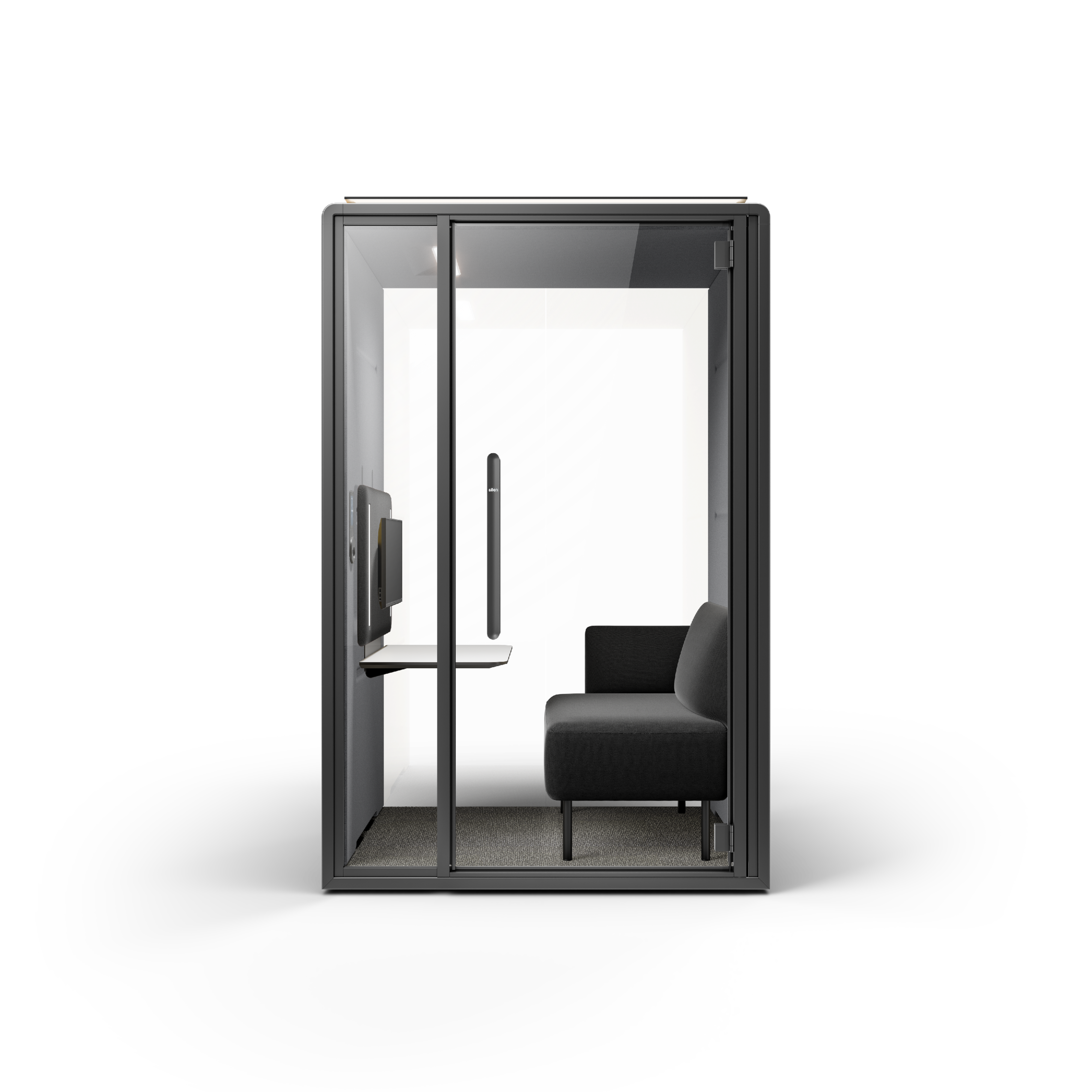
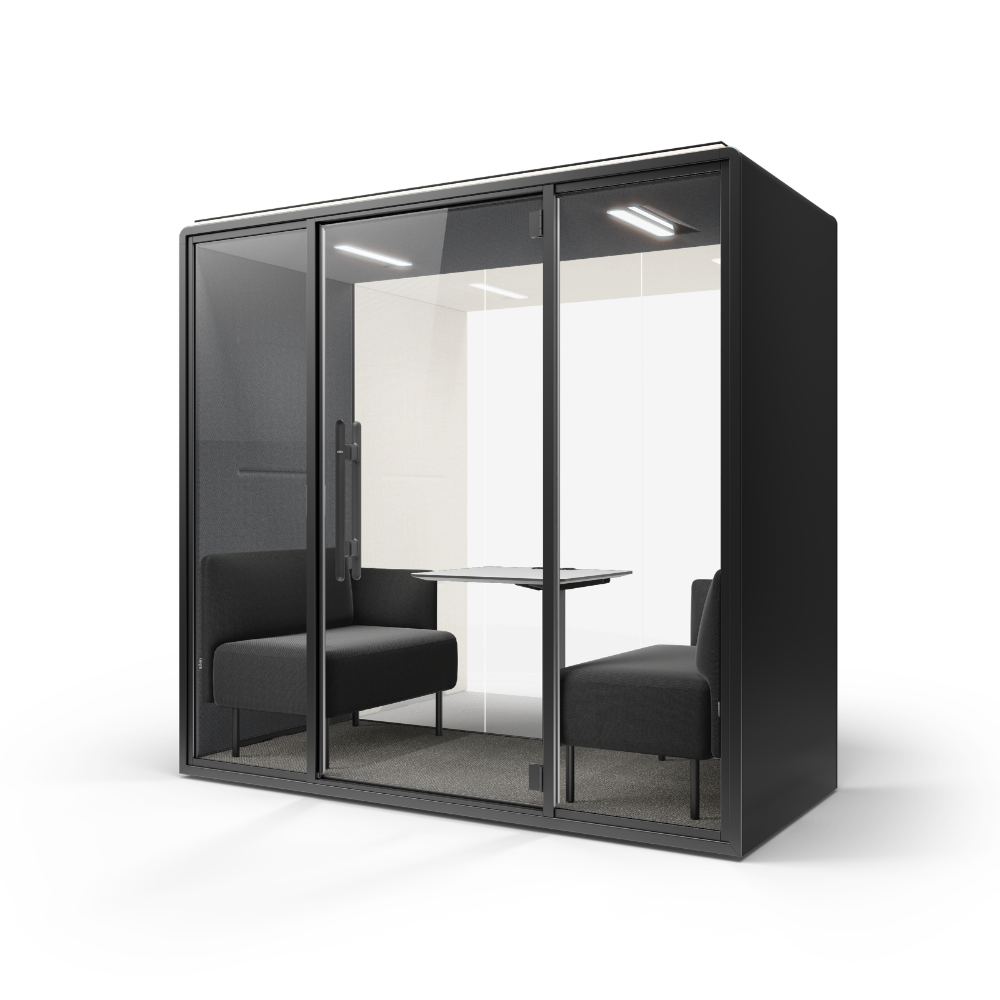
A Meeting Pod rents for $749 a month, seats 2 to 4 and stands on 16.1 square feet. It goes in during one visit, in under four hours. A built meeting room for the same job takes 150 square feet or more, and it needs drawings, a contractor and your landlord’s consent before anyone starts.
This page is about building one room. For the per-square-foot arithmetic across a whole floor plate, office pod rental cost against a build-out works it through metro by metro.
Cost table: build-out, a pod you own and a pod you rent
A meeting room fit-out cost is quoted per square foot. A pod is quoted per month, or once. Putting all three on one page is the only way to see what you are actually choosing between.
| Built meeting room | Meeting Pod, bought | Meeting Pod, rented | |
|---|---|---|---|
| Floor it takes | 150 sq ft | 16.1 sq ft | 16.1 sq ft |
| Up front | $22,500 to $60,000 | $16,500 | No capital |
| Ongoing | Yours to maintain | Yours to maintain | $749 a month, maintenance included |
| Time to first call | 3 to 9 months | Under four hours on site | Under four hours on site |
| Noise reduction | Whatever the specification delivers | Up to 43 dB | Up to 43 dB |
| If the floor changes | Stays where it was drawn | Disassembles, moves between floors | Disassembles, or hand it back |
| How it ends | Making good is usually yours | You hold the asset | 30 days’ notice after the term |
The assumptions behind that table. The build column uses published US fit-out guidance from JLL and CBRE, at $150 to $400 per square foot applied to a 150 square foot conference room, and their three to nine month timeline to permit and build one inside an existing lease. The pod columns use our published Meeting Pod rates. Delivery, installation and collection sit outside all three columns, because they are quoted against your address and how the pod gets in rather than published as one number.
Rental terms start at six months, and the agreement rolls monthly once the initial term ends. Rent-to-buy opens at month 12, so the middle and right columns are not a permanent fork.
Lead time: from access survey to first call
The lead time to rent an office pod is where budgets most often go wrong, because two separate clocks get treated as one.
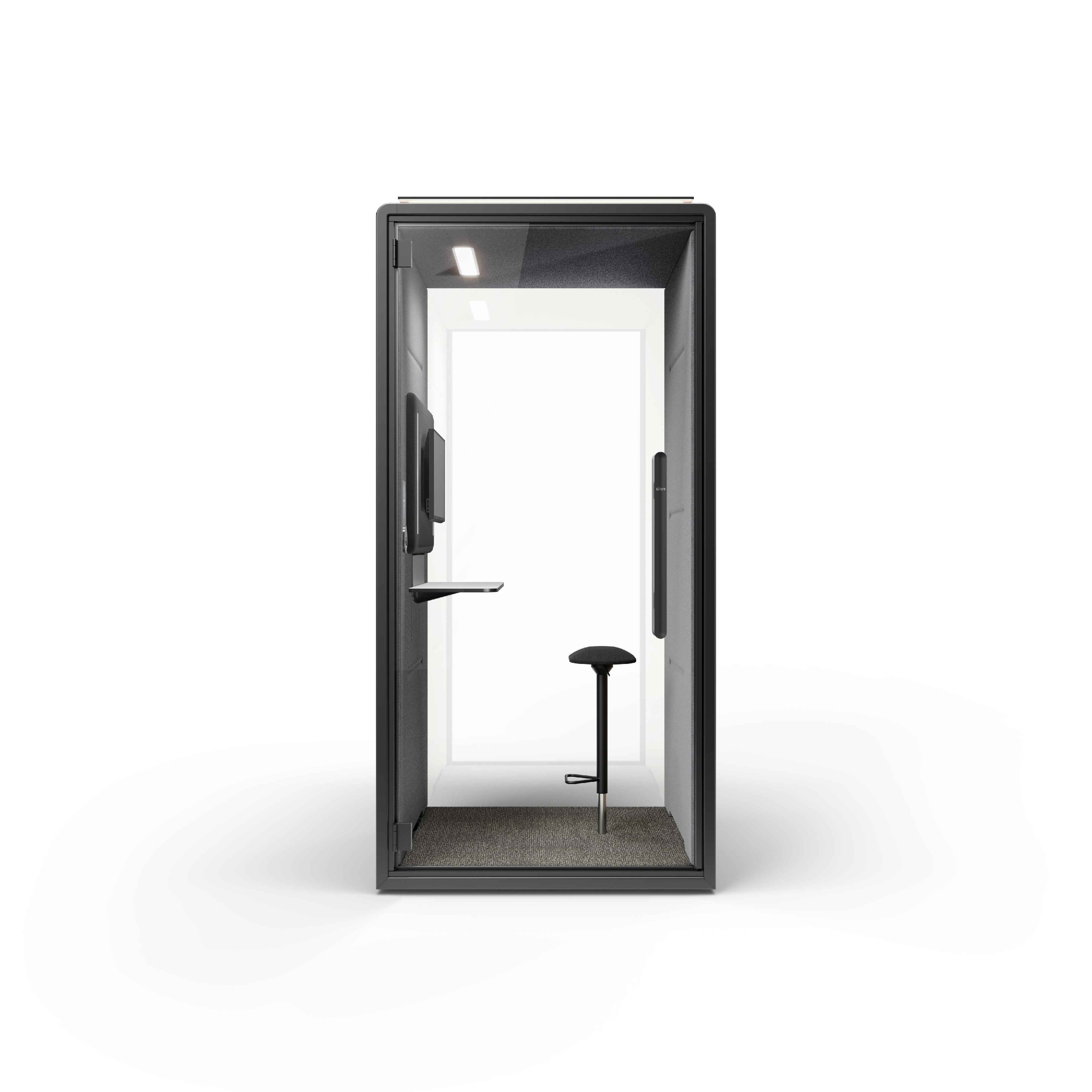
The install itself is short. A Call Pod goes up in under two hours, a Work Pod in under three and a Meeting Pod in under four. One team, one visit, and the floor is usable that day.
Reaching that visit is quoted rather than published. It depends on the model and on how your building is reached, so we price it against your address instead of printing one figure for every floor in the country.
Set that against three to nine months to permit and build a small conference room inside an existing lease. Every one of those months is a month your team is still hunting for somewhere quiet to take the call.
Four things shorten your own lead time, and all four are yours to control.
- Measure before you ask. The door, the lift and the ceiling decide the route in. Footprint, doorways and ceiling height lists exactly what to take.
- Send the access facts with the enquiry. The floor, the lift and the narrowest doorway are what the delivery and installation figure is built from.
- Clear the building question early. Landlord approval and permits for office pods covers what to send and what the building will ask.
- Pick the model first. Choosing between sizes after you have asked for a date restarts the quote.
What you give up in floor area
This is the trade the cost table cannot show on its own.
A small built conference room takes 150 square feet off the floor plate and holds it, whether anyone is inside or not. A Meeting Pod takes 16.1 square feet and seats 2 to 4. In the footprint of one built room you could stand roughly nine pods.
That is not an argument for nine pods. It is the reason this comparison works per private seat rather than per square foot. A built room only wins on space per occupant when it is full, and a conference room booked by two people is 150 square feet doing the work of 16.
Two practical consequences follow. A pod can stand where a room cannot be built: against a column, along a corridor, or on a floor whose landlord will not permit partitions. And when the floor is rearranged, the pod moves with it instead of being demolished.
What building a meeting room actually involves
The partition quote is the visible part. The work around it is what moves the date.
Drawings and the landlord’s consent
An enclosed room is an alteration, so most leases ask for written consent. In practice that means a drawing, a specification and a licence to alter. Ask your landlord early how long consent takes, because that clock runs before a contractor is booked.
Read what the lease says about making good. If you have to return the floor to its original state, the cost of taking the room out belongs in the quote now, not in a surprise at the end of the term.
The contractor, and what the quote has to cover
Ask for the quote broken down rather than as one figure. At minimum you want the partition system, the door and its ironmongery, the ceiling and floor junctions, lighting, power and data, and any ceiling grid that has to be cut and made good.
Then ask who holds the programme. A partition supplier often prices the partition alone. Someone still has to sequence the electrician, the ceiling and the final clean, and that someone is usually you.
Fire, sprinklers and sign-off
Enclosing a space changes how it is detected, ventilated and reached. Your contractor confirms what your jurisdiction and your building require. The questions are the same ones each time.
- Does the new room need its own smoke detection?
- Does the sprinkler layout still cover the floor once a ceiling goes in?
- Does the door swing, and the route out, still work for the occupancy?
- Does the ventilation reach inside, or does the room need its own supply?
Get those answers in writing before you accept an installation date. They are the items that most often move a build-out by weeks.
What drives a meeting room partition cost
Quotes for the same floor area vary widely, and the spread is not padding. Four things move it.
- The system. Drywall is built in place. Demountable and glazed systems cost more to buy, and can be taken down and re-used later.
- The acoustic specification. A partition performs as a system. The junctions at the ceiling and the floor matter as much as the panel between them.
- The base building. An exposed services ceiling, an uneven slab or a protected interior all add work before the room starts.
- Working hours. Out-of-hours installation keeps your floor usable and raises the labour rate.
Soundproof meeting room cost, and what the rating means
This is where the category’s own marketing does the most damage. A partition panel is sold on a laboratory rating, and the room you end up standing in is rarely that number.
Performance is set by the weakest junction: the seal around the door, the gap above a suspended ceiling, the holes cut for services. A panel rated in a test chamber has none of those.
A pod is rated as the finished product instead of as a component. A Meeting Pod gives up to 43 dB noise reduction, and 32 dB inside while the floor outside sits at 75 dB. Those figures describe the thing that arrives on your floor, which is the comparison worth making.
When building the room still makes sense
Renting is not the right answer for every room. These are the cases where a build, or at least not a pod, is the better call.
- You need to seat more than four. Our largest pod takes 2 to 4 people. A boardroom for eight is a built room.
- The room has to read as part of the floor. A pod takes custom branding on a 24-month term, but it still looks like a pod.
- You cannot get it in. Access decides this, not floor area, and it is worth checking first.
- The floor is being rebuilt anyway. During a full fit-out the marginal cost of one more room is at its lowest.
- You own the building and intend to keep it. Capital spent on your own asset is a different decision from capital spent on a leased floor.
The break-even: months of rental against capital spend
For one room the arithmetic is short. A Meeting Pod is $749 a month to rent, or $16,500 to buy outright. Rent-to-buy opens at month 12, so renting first is not a dead end if the need turns out to be permanent.
Against a build the comparison is not price against price. It is an operating cost you can end on 30 days’ notice, set against capital committed before the first meeting happens. Divide your build quote by $749. That is how many months of rental it represents.
Two things usually settle it. If the lease has fewer years left than that break-even, the build is hard to justify. If headcount on the floor is still moving, the room you draw today opens sized for a team that has already changed.
What to do next
Get both numbers before you choose. Ask your contractor for a broken-down partition quote that includes making good. Ask us for a pod quote that includes delivery, installation and collection to your address.
If the problem is that your rooms are permanently booked rather than missing, meeting rooms always booked, for Atlanta consulting teams covers that version of the decision. If a slow fit-out is what is blocking you, private rooms without a build-out for Atlanta education teams covers it on a campus floor. If renting is already settled and you are comparing operators, 5 things to look for when renting an acoustic office pod lists the questions worth asking. When you want numbers against your own address, talk to a person.
Get a quote for your office.
Tell us the metro and the number of people who need quiet space. We reply within one business day.