Compare
In-office meeting pod vs renting an outside meeting room
Meeting room rental is priced per booking. A meeting pod is priced per month. So the question is not which is cheaper, it is how often your team needs a private room: a few times a year, book outside; most weeks, the booking fee stops being the cheap option.
| Meeting Pod on your floor | Rented outside meeting room | |
|---|---|---|
| Availability when the team needs it | Always there, on your own floor | Whatever is free when you book |
| Privacy and noise | Up to 43 dB noise reduction, the same every time | Varies by room, and judged on arrival |
| Travel time for attendees | None | Door to door, per person, both ways |
| Cost structure | $749 a month, fixed, maintenance included | Per booking, so it scales with use |
| Setup and commitment | Installed in under four hours, from a six-month term | None beyond the booking |
When teams rent meeting rooms outside the office
Booking a room elsewhere is usually one of five situations: a client meeting that needs a reception desk and a room bigger than any booth, an all-hands or board meeting that no pod would seat, an offsite, a city where the team has no floor at all, or an office whose own rooms are permanently taken.
Those are different problems with the same symptom, and only some of them are solved by putting a room on your own floor. The last one is the one a pod answers directly: the rooms exist, they are simply never free.
Availability and booking
An outside room gives you whatever is unbooked at the hour you want it. That is fine when the meeting is planned a week out, and poor when a client calls at 11am on a Tuesday. Hybrid attendance clusters Tuesday to Thursday, which is exactly when everyone else is trying to book too.
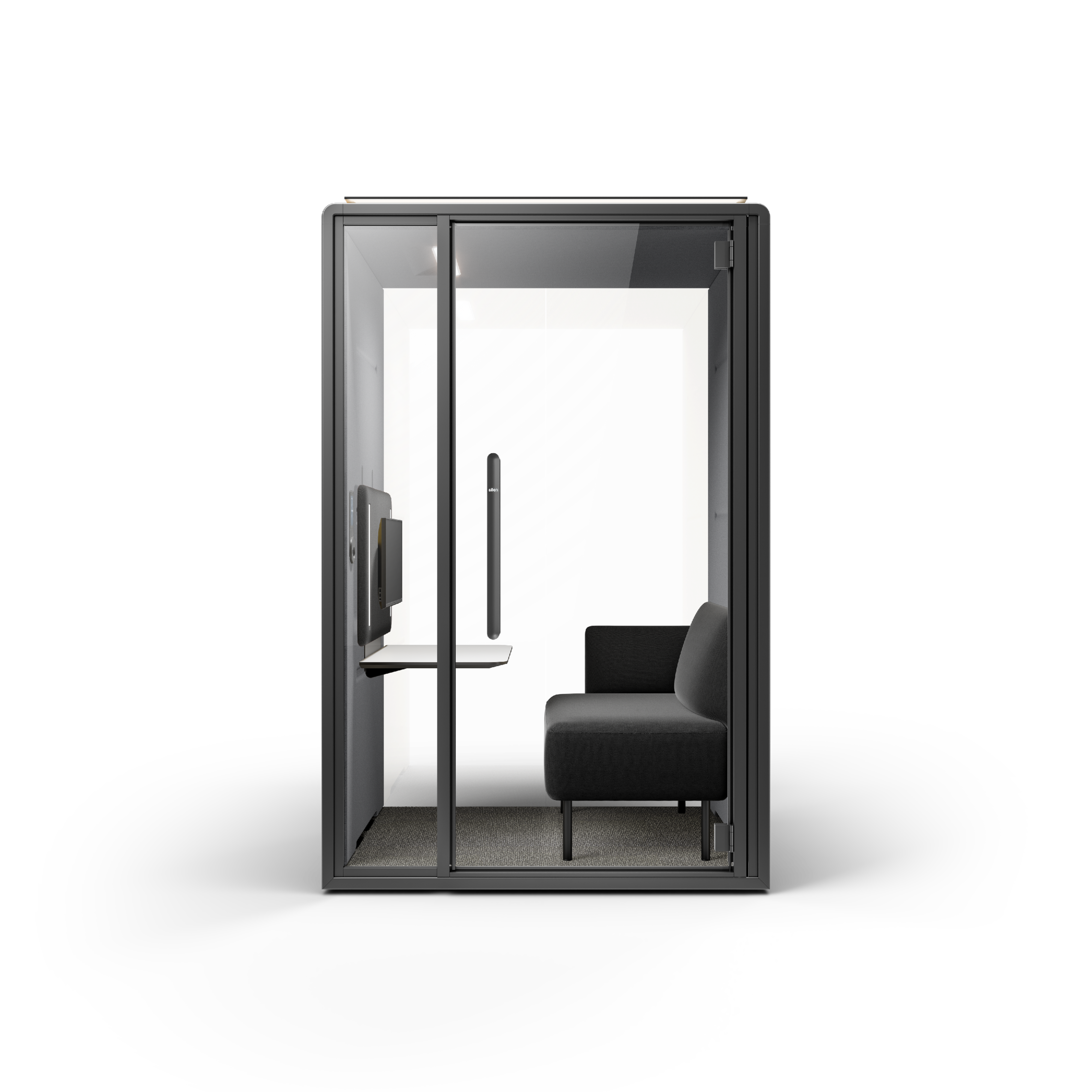
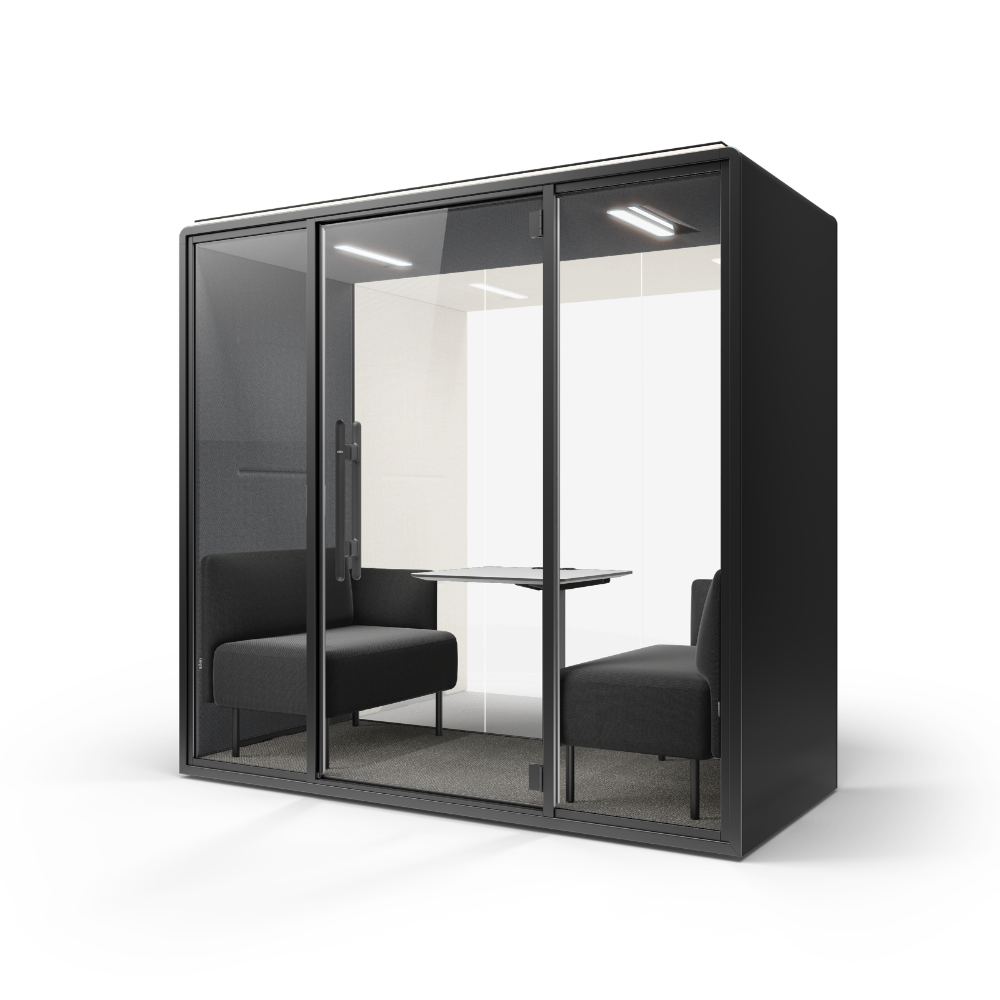
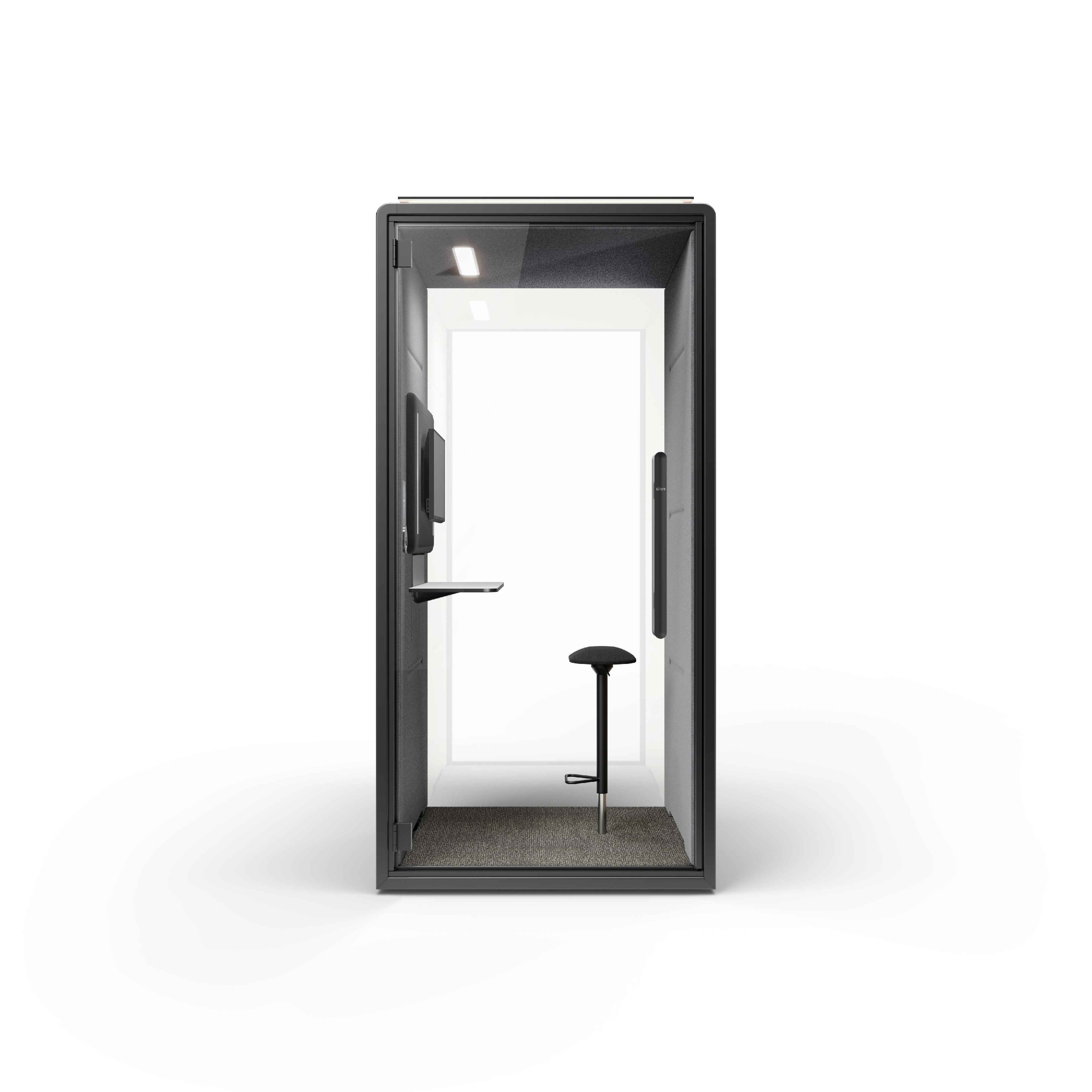
A pod on the floor removes the booking step rather than speeding it up. It takes two to four people on 16.1 sq ft and it is available because nobody else can take it. Occupancy sensing is included on every pod we rent, so a floor can see what is in use without putting a calendar in front of it.
Privacy, noise and travel
A Meeting Pod gives up to 43 dB noise reduction and reads 32 dB inside while the floor outside sits at 75 dB. Those figures describe the finished product, and they are the same on the fortieth meeting as the first. An outside room is judged on arrival: you learn what the wall between you and the next meeting is worth once you are already in it.
Travel is the cost that never appears on the invoice. A half-hour meeting with twenty minutes of travel each way, for four people, spends more time in transit than in the room. For a confidential conversation there is a second cost: the meeting happens in a building you do not control, past a reception desk that logs who arrived.
Cost structure compared
The two models behave differently rather than simply costing differently. An outside room is variable: you pay when you use it, nothing when you do not, and the bill rises with every booking. A Meeting Pod is fixed at $749 a month with maintenance included, and the tenth meeting of the week costs the same as the first.
That makes the crossover a question of frequency. Take what your team currently spends on outside rooms in a month and divide it by $749. If the answer is above one, the pod is already the cheaper arrangement before travel time is counted.
Two things sit outside that figure. Delivery, installation and collection are quoted separately against your address and how the pod reaches the floor. And the monthly fee is the same in every US metro we serve, so the comparison does not move city by city the way room rates do. Pricing has all three pods and what each term includes.
When an outside meeting room is the better choice
Renting a room elsewhere is the right answer more often than a pod supplier likes to admit.
- More than four people. Our largest pod takes two to four. A room for eight is a room, not a booth.
- Client-facing meetings that need a front of house. A reception desk, a waiting area and somewhere to make coffee are not things a pod provides.
- A city where you have no floor. There is nothing to install a pod into.
- Genuinely occasional use. A handful of private meetings a year will not cover a monthly fee, and it should not try to.
- Anything needing catering, staging or AV beyond a table.
Which option fits which team
Three patterns decide it in most offices. If two to four people need a private room most weeks, the pod wins on frequency alone. If the need is monthly or rarer, keep booking outside and spend the difference elsewhere. And if attendance clusters midweek, the pod is worth more than its monthly fee suggests, because midweek is when outside rooms are hardest to get.
Where the pattern is still forming, the term is the hedge. Rentals start at six months and roll monthly afterwards on 30 days' notice, so a floor that changes is not an expensive mistake. Why renting sets that against buying a room outright, and the three pods compares the sizes.
Work out your own crossover
Add up last quarter's outside room bookings, divide by three, and compare the monthly figure with $749. Then tell us the floor and the access, and we will price the delivery and installation for your building so the comparison is complete.
Price it against your own room spend.
Tell us the floor, the access and how often you need a private room, and we will put the two side by side.